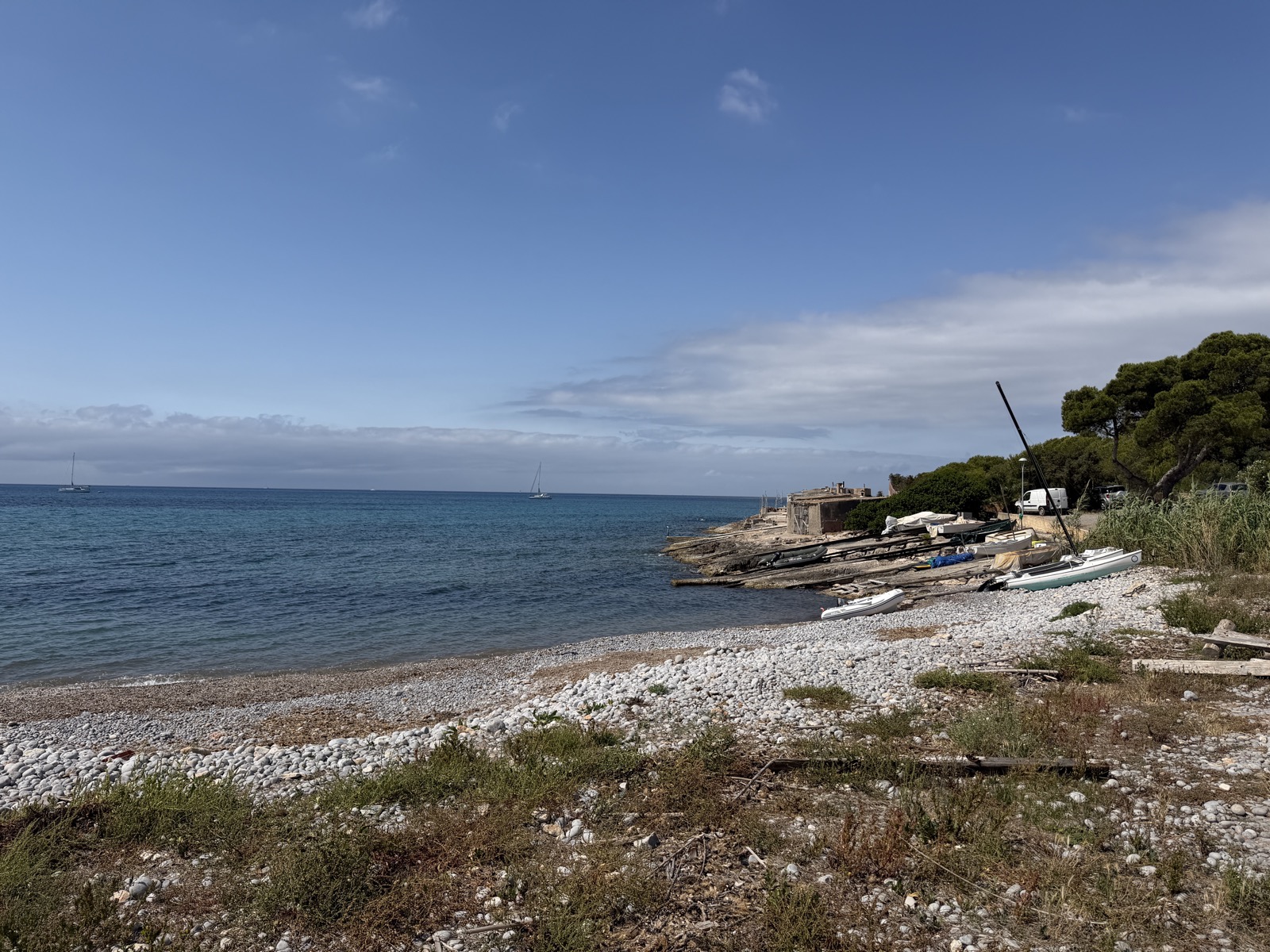
The evening of June 4th was spent at a beautiful anchorage off a beach, with large cliffs and some sort of ruin or fort above. There was only one other boat in the bay, but a bunch of campers on the beach. I relaxed on the back of the boat, and watched the sun set.
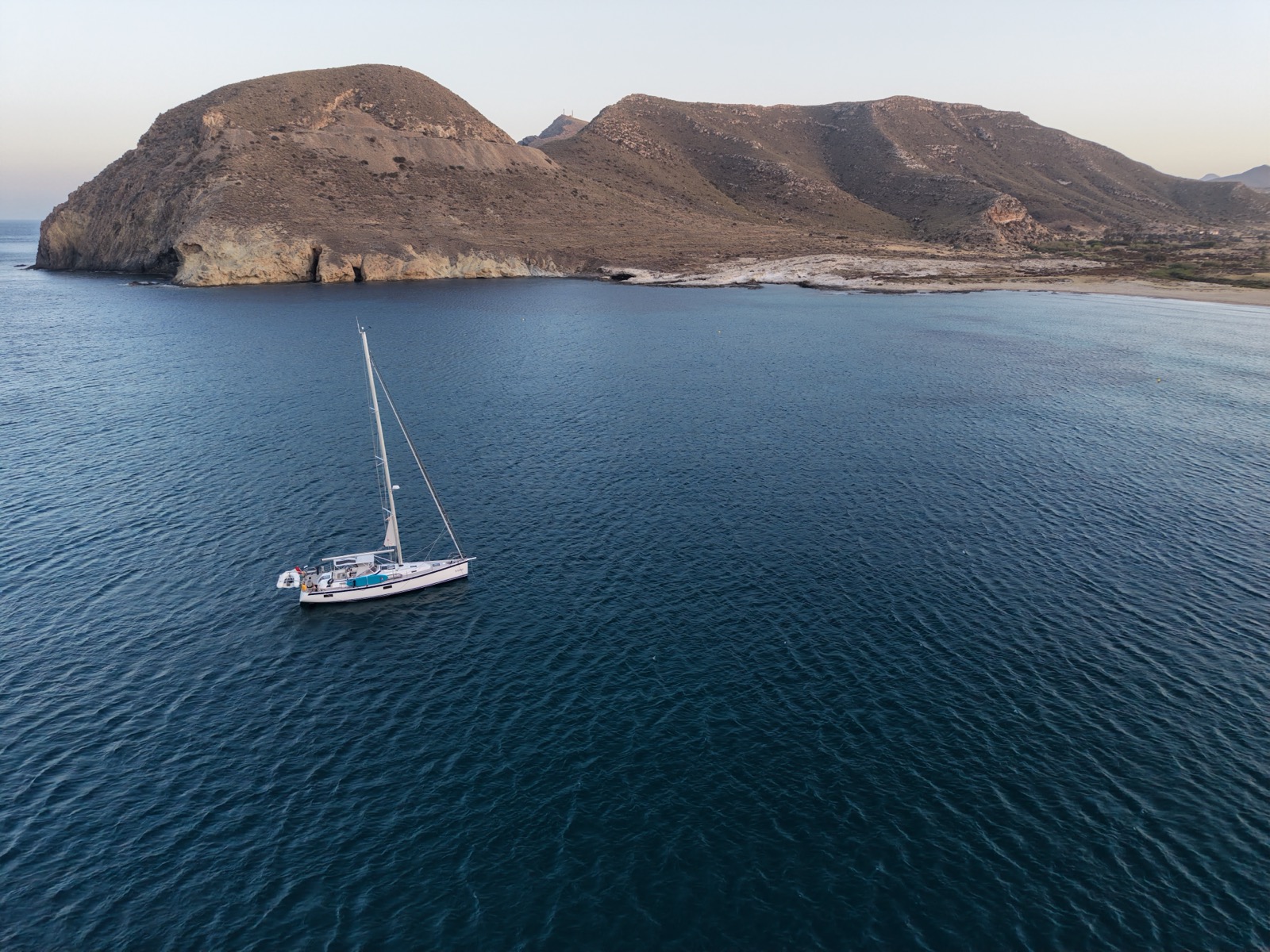
I set off around 7am the next day, aiming for an area called Cabo de Palos, a small peninsula just past Cartagena. The previous day I had contacted the local fisheries and aquaculture office to request a mooring buoy in what looked like another beautiful spot to spend the night. It was a long haul, and I was planning on a late-night arrival. The sailing was good. A few long tacks far out from shore, then back towards land. I approached the mooring buoy just before midnight, in the dark, with a decent swell, and completely unprepared for the short adventure that would follow.
For those who don't know, a mooring buoy is a buoy that you tie your boat to. It's usually affixed to a large concrete block with a chain and provides a safe and secure moorage. They can be tricky to tie up to because they are small, low to the water, and you need to feed a line from your boat through the ring at the top of the buoy and back to your boat. In wind and waves, it can be extremely challenging. Luckily, I learned a great trick from an instructor when taking a course out of Vancouver: just toss a line over the buoy and back to the boat. Don't worry about the ring. This gets you temporarily attached, and then you can fuss with getting a line through the small ring at the top. Anyway, back to the adventure.
It's almost midnight, pitch black, and large waves are bouncing the boat around. I'm trying to hook a tiny mooring buoy that seems to be placed very close to some rocks and the shore. I make my approach facing into the wind for some control, and with a headlamp, quickly scuttle up to the bow and attempt to toss a line around the buoy. I fail several times. Each attempt requires me to scuttle back to the helm and try another approach. I can hear waves crashing against rocks just metres away.
I finally lasso the buoy and then properly attach two lines through the ring.
Ready for bed. Exhausted after a long day and a stressful last 15 minutes.
While getting ready for bed... CRUNCH! The whole boat shakes. That feels like I hit something. But how is that even possible? I'm tied up to a mooring buoy booked through the local government. I gave them all the boat's dimensions. They wouldn't possibly assign me a buoy that was too shallow for my keel? BANG! Again! Looks like I'm not staying here.
I fire up the engine and quickly untie from the buoy. I'm back out in the swell. It's past midnight and I need to find somewhere else to stay. I backtrack 15 minutes to a cove that is fully open to the swell, but it's the only option nearby. I set the anchor and head to bed, unable to properly process whatever damage I may have just caused.
After a short and unpleasant sleep, I wake around 5:30 and briefly consider diving under the boat to assess the damage, but there's still lots of swell, the water looks cold, and I'm not in the mood. There's been no water ingress, so I decide to leave the assessment for later.
I continue on, making the decision to find a well-protected marina and get a proper sleep. I sail for 11 hours to a town called La Vila Joiosa.
About 30 minutes from the marina, I prepare my aft dock lines for my first solo med mooring.
Med mooring is how most Mediterranean marinas pack a lot of boats into a small area. You back the boat up to the dock, toss your aft lines around two cleats, then grab something called a slime line or lazy line out of the water and pull it up as you walk to the bow. The slime line eventually turns into a large thick rope, also covered in slime, that is attached to a cement block on the seabed. You pull it tight and attach it to the cleat at the bow.
Things go smoothly at the marina, and after a short walk to a grocery store for supplies, I'm back on the boat contemplating sleep at 7pm.
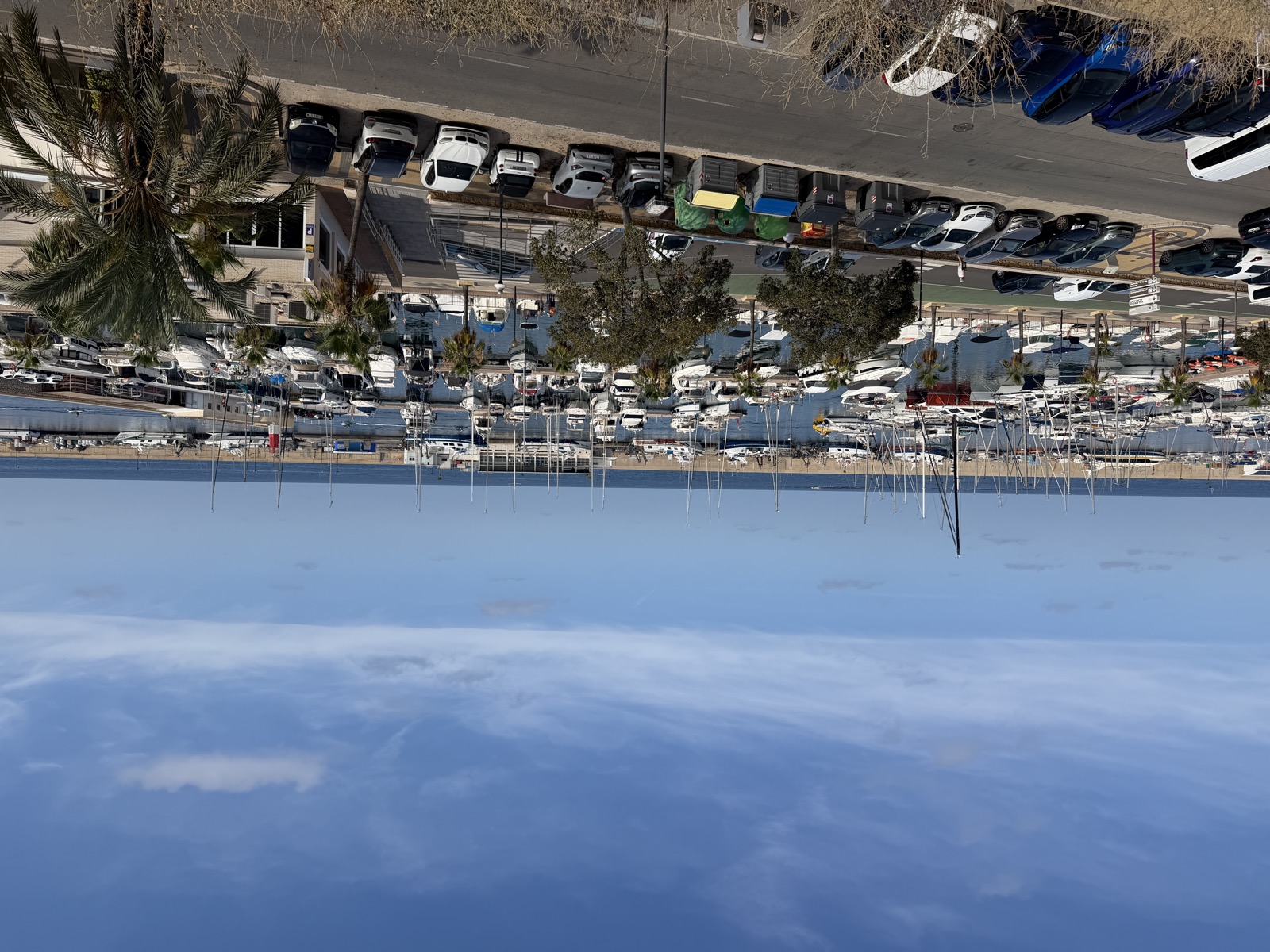
I have an absolutely wonderful sleep and feel more rested than I have in weeks. I'm up at 6am, untied and moving 30 minutes later.
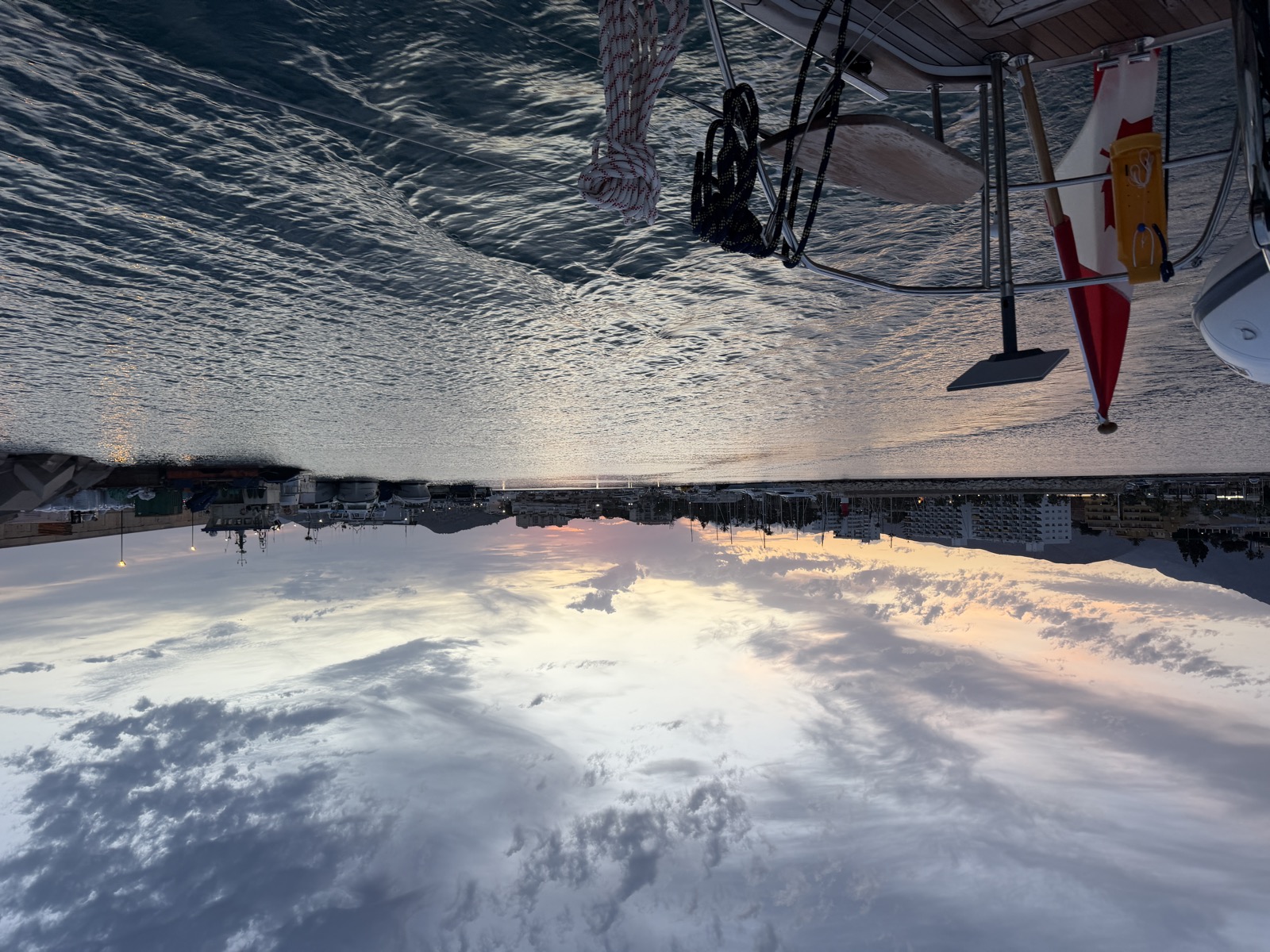
I make full use of the rest and put in a big day: sail up to Dénia to pick up an electric engine for the dinghy, then make the crossing to Ibiza. I arrive at 11:30pm, 95 nautical miles later, and drop the anchor in a quiet cove near the large rocky spire of Es Vedrà.
I wake up to 26°C clear blue water. I dive under the boat to assess the damage from the other night. Nothing horrible, but there's definite damage on the keel and one of the rudders. I decide it's not urgent and will look into getting it fixed when I eventually haul the boat out.
After a relaxing morning, I make a short one-hour journey to a bay beside the airport, a good staging area to pick Britt up when she arrives the next day. My friend Aylin was visiting Ibiza and rearranged her flight so we could hang out for a couple of hours. I picked her up from shore and we caught up over a glass of wine.
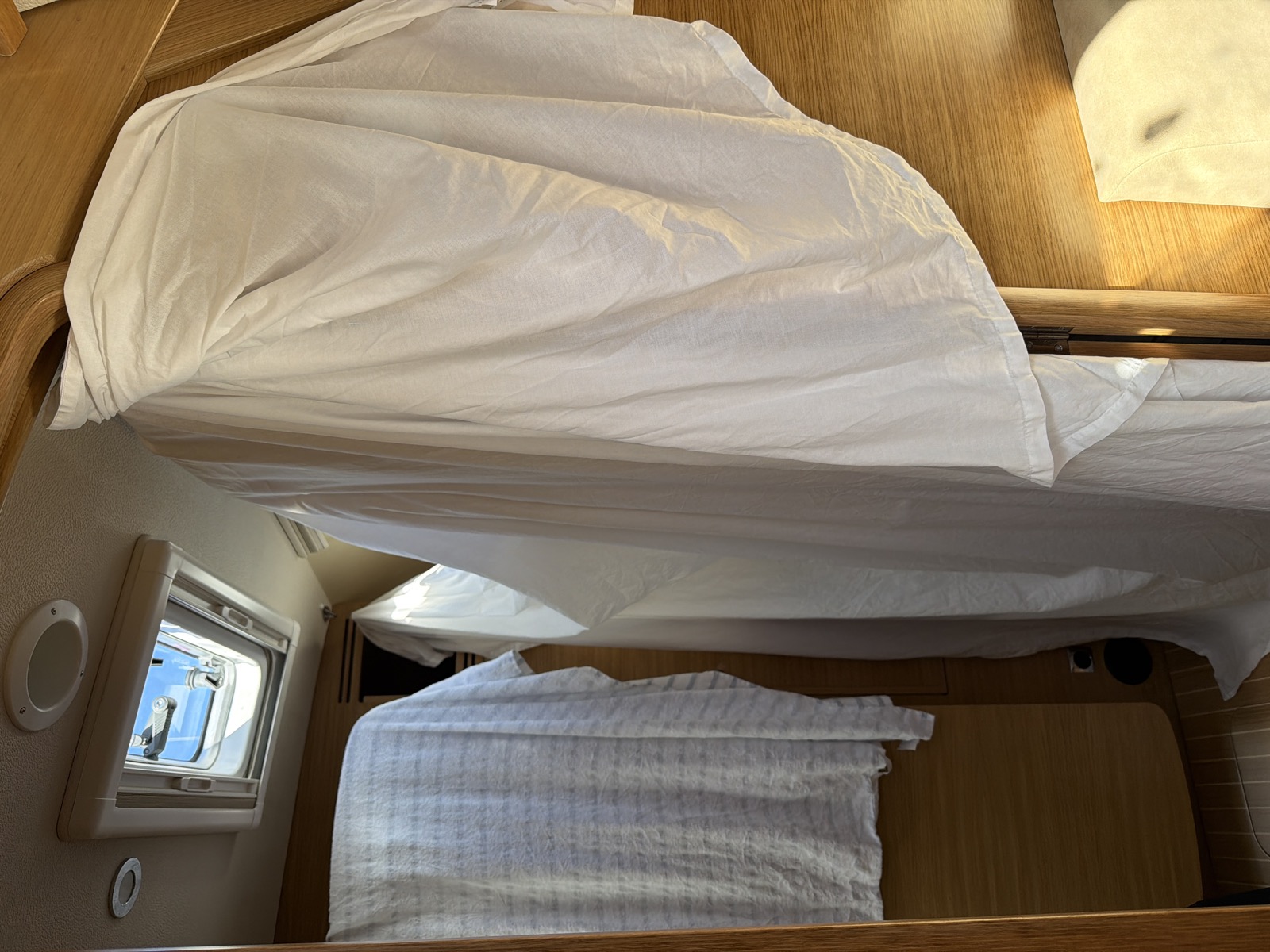
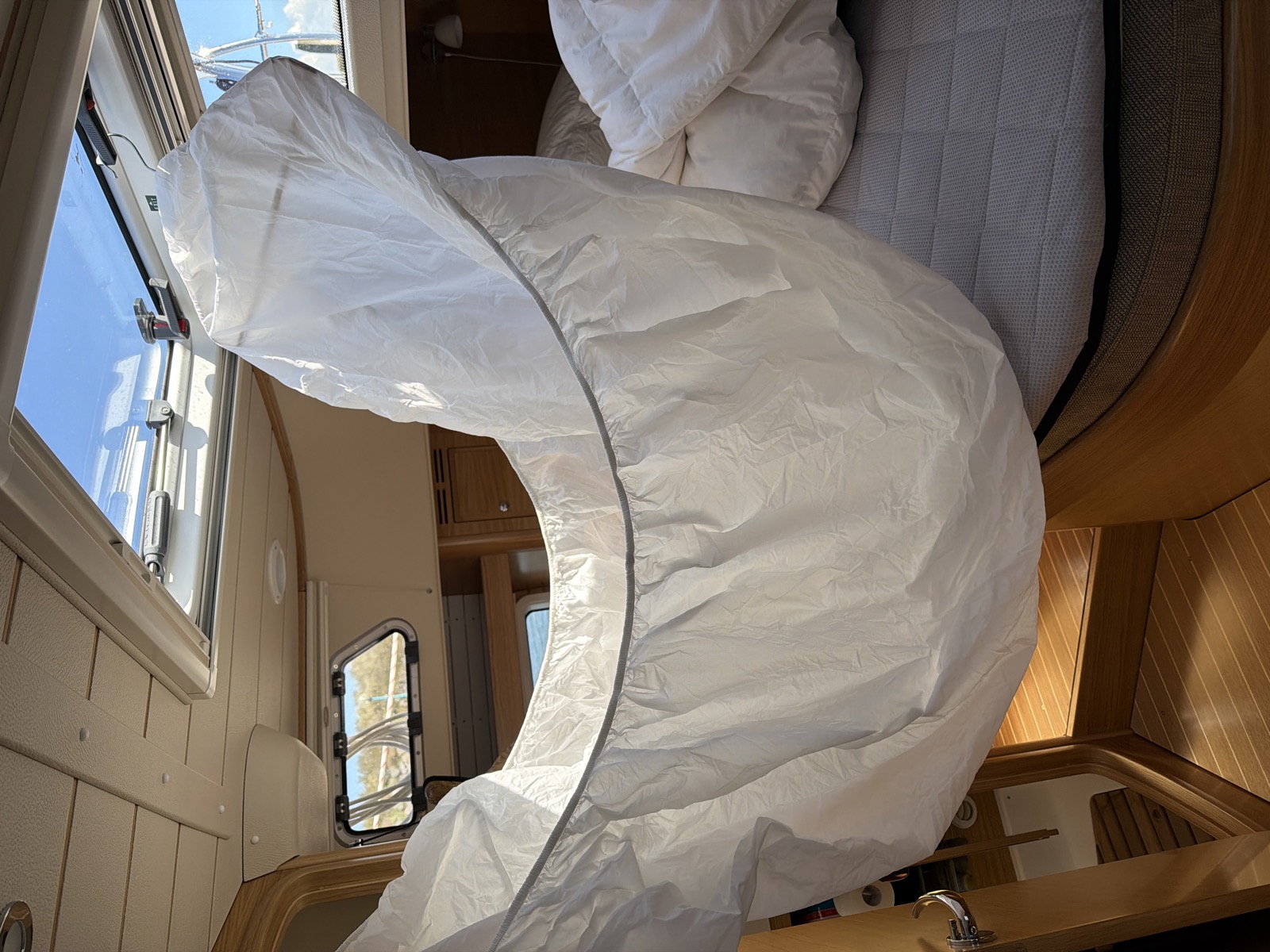
I may not have mentioned it before, but the boat has a small washing machine. It's wonderful to be able to run a couple of loads while at anchor. No dryer, so every time I do laundry, the boat turns into a fort with bedsheets and clothing strung up everywhere to dry.
I met Britt at the airport in the evening and we headed back to the boat. She confirmed it was her first time going straight from an airport to a beach and being transported by dinghy to a sailboat.
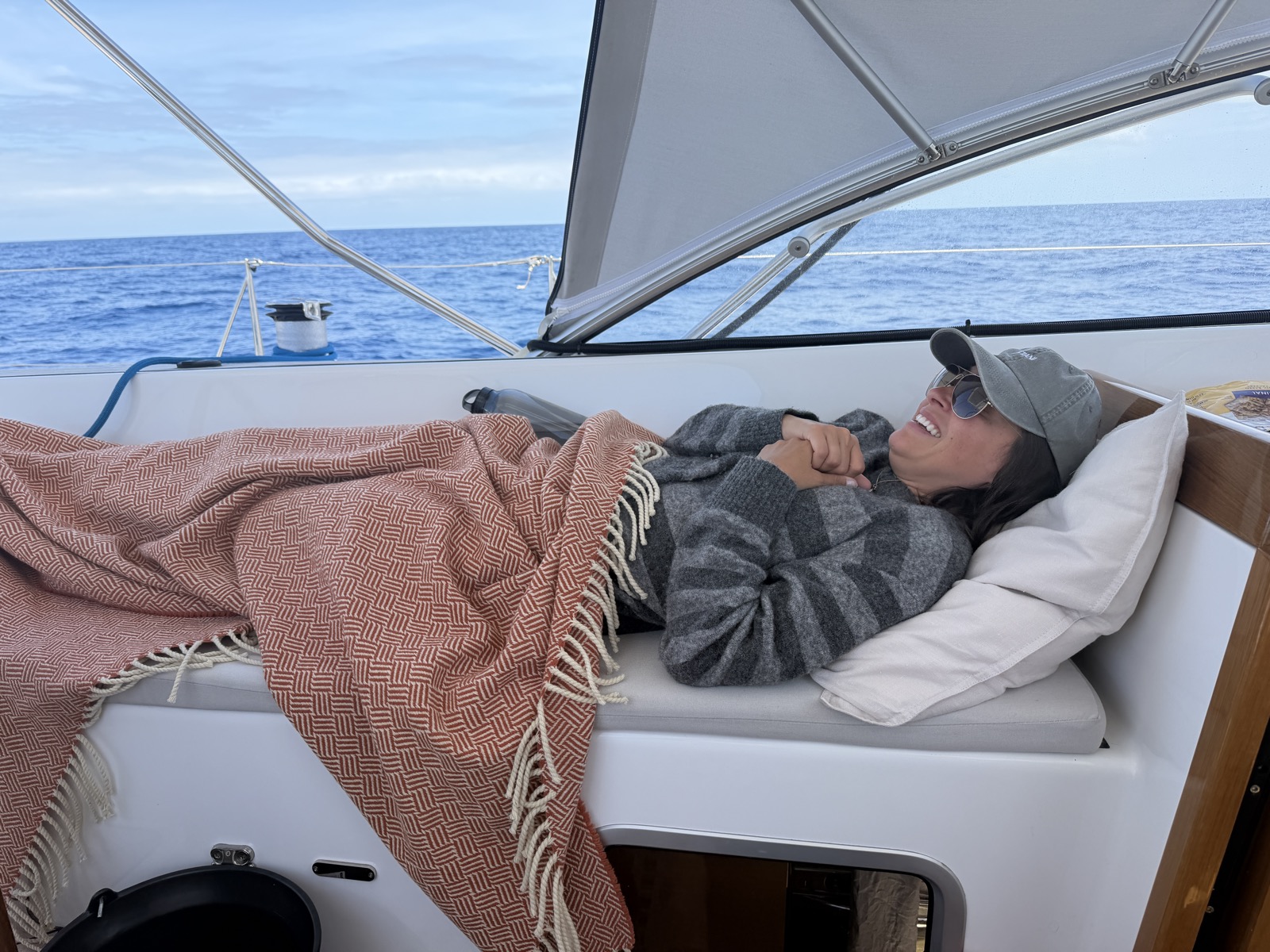
Britt is supremely susceptible to seasickness, so we made sure she had a full arsenal of options: scopolamine patches from Scott, a Zofran prescription, dimenhydrinate gum, Gravol, ginger tablets, candied ginger, and straight ginger root.
The next day we sailed along the north side of Ibiza. There was some swell, and Britt seemed to be handling it fine at first. But eventually the seasickness grabbed hold and she christened a bucket several times. To make things worse, the anchorage I chose wasn't very well protected from the swell. We both ended up having a rough sleep.
We woke up early, and I was eager to leave, but another adventure was moments away. We prepped the boat for departure and started raising the anchor, but it wouldn't come up. It was stuck. I jumped in with my mask to see what was going on. The anchor was 17 metres down, just a bit too deep for me to do anything useful. But I could see it was wedged under the edge of a large boulder. We tried pulling it from a different angle with the dinghy. We tried circling around and pulling from a different angle with the boat. We tried lowering a weight looped around the chain on a line to shift the angle. Nothing worked. After an hour of attempts, we finally got it free. A nearby sailboat cheered, having watched the whole ordeal.
We made the crossing to Mallorca and anchored in a large, calm bay at Santa Ponça. We took the dinghy to shore to explore, but weren't too impressed with the touristy stretch of town we walked through.
The next day we motored over to Palma and moored in a marina. A Volvo mechanic did the 200-hour engine service, then we explored the city. We covered a lot of ground, and Britt found us a great place for dinner.
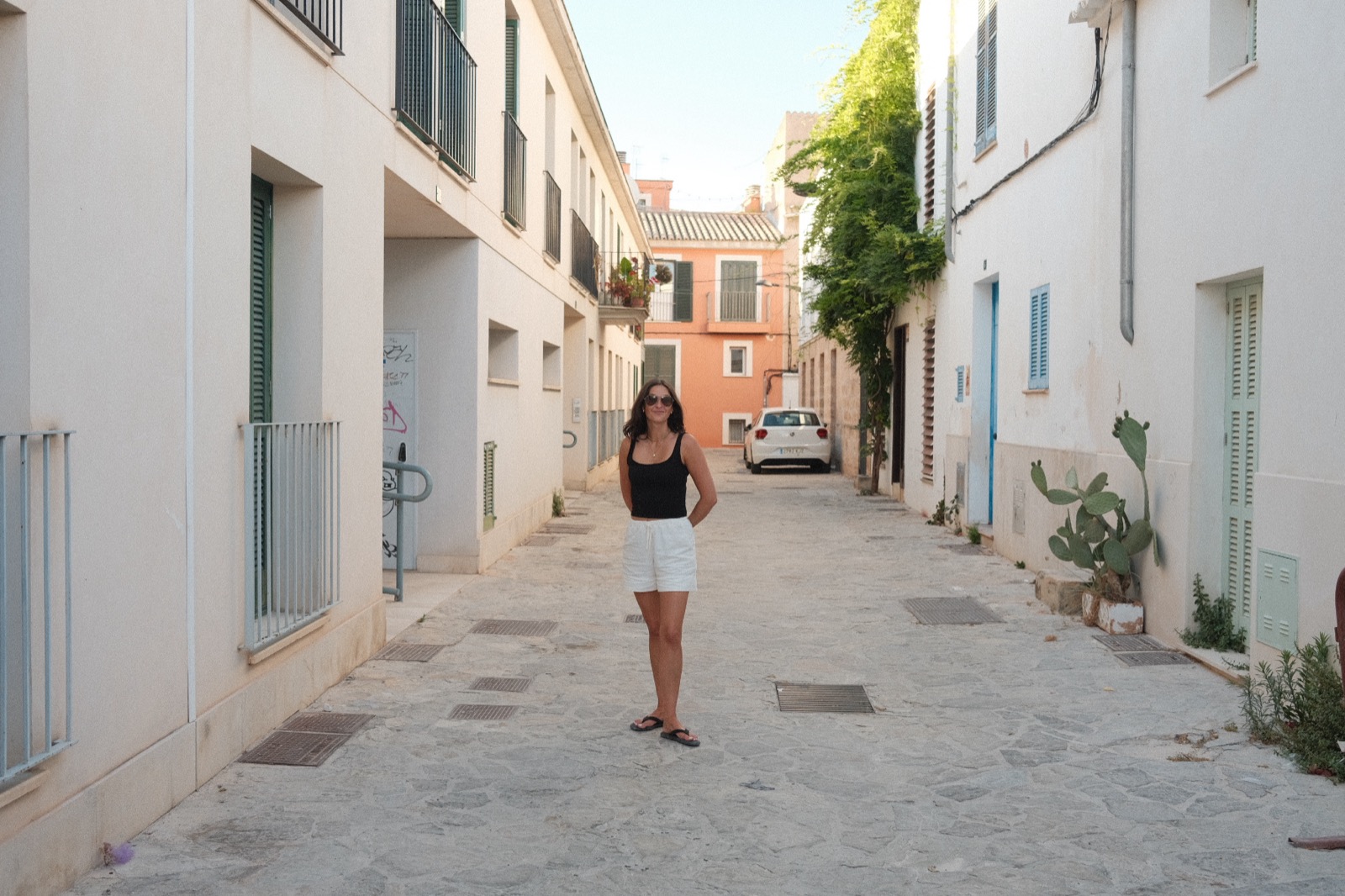
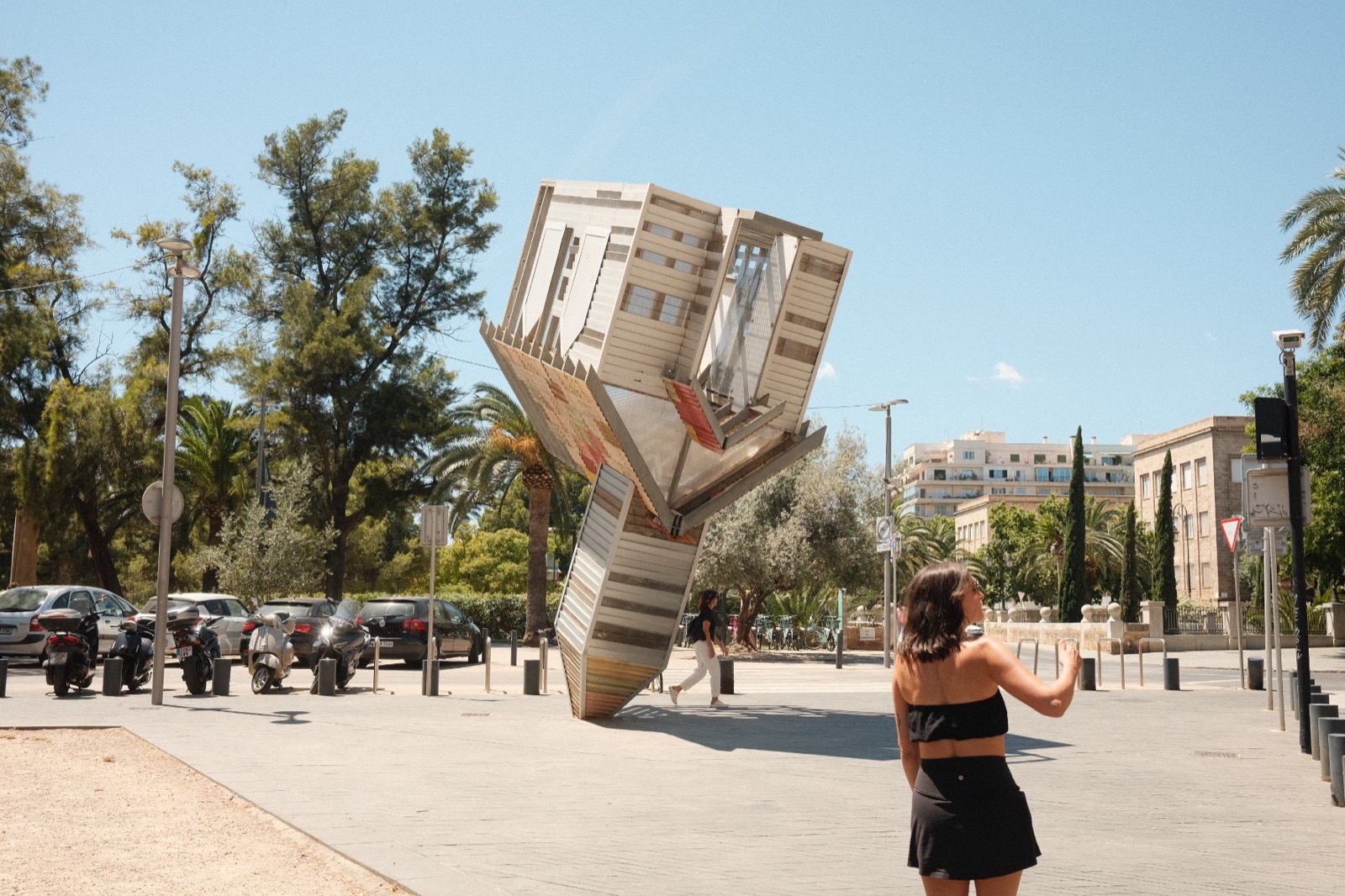
The following day we ran some errands and checked out of the marina by noon. We had our sights set on a cove on the southeastern corner of the island, but decided on a shorter, more relaxing day instead. We dropped anchor off a beach near a town called Es Estanys, went for a swim, watched the sunset, and had a nice dinner aboard.
We made it to the far eastern side of the island the next day, then crossed over to Menorca the day after. We went straight to a town called Maó, knowing nothing about it other than it would make a good jumping-off point for the crossing to Sardinia. The town was a pleasant surprise. We learned it sits on one of the deepest natural harbours in the world, and has been fought over for centuries as a result. Old fortifications were visible as we entered the port. The town itself was full of design-centric shops. We walked around, had gelato, and found a great place for dinner.
The following day we went back into town to wander a bit more and pick up a few last-minute things before the big crossing to Sardinia.
About 30 hours, 190 nautical miles, and across a large stretch of the Mediterranean. Britt was a little nervous, but she'd spent the past week getting on top of her seasickness and familiarizing herself with the boat and its systems. We left the harbour at noon and pointed the bow toward the northwestern tip of Sardinia. We had the leftover veggie paella Britt had made, watched the sunset, and then started our watch rotation.
22:00–02:00 — Kyle
02:00–06:00 — Britt
06:00–10:00 — Kyle
10:00–14:00 — Britt
At 6:00am I joined Britt in time to see the sun rise ahead of us. She was still alert and chipper after her four-hour shift; I was groggy after my four hours of sleep. Our ETA for the Sardinian coast was 18:00.
Maritime flag etiquette dictates that when you enter the waters of a foreign country, you're expected to fly that country's flag from your starboard spreader, the horizontal strut partway up the mast. It's a sign of respect, essentially telling the locals that you come in peace and intend to follow their rules. Fail to fly one and you're technically being rude, though in practice the consequences are probably just a disapproving look from a harbour master, or an increased chance of being contacted by the coast guard. This flag is referred to as a courtesy flag.
Stani flies the Canadian flag at the stern, because that's where she's registered. The yellow "Q" flag is flown in place of a courtesy flag when requesting customs clearance upon arriving in a new country. Once we've cleared customs, we swap it out for the flag of whatever nation we happen to be sailing through.
As we crossed from Spanish into Italian waters somewhere in the middle of the Mediterranean, and we didn't need to clear customs, it was time to swap the Spanish courtesy flag for an Italian one. It's a small ritual, but a satisfying one. A little acknowledgement that we'd crossed into somewhere new.
In other news, my Schengen visa has only 12 days left, which isn't enough time to comfortably get to another non-Schengen visa country. In the area, that means Montenegro, Albania, or Turkey. The visa works on a 180 day rolling window, and doesn't reset by simply by leaving the EU. The only way to get more days is to wait for the window to roll over. So I've hired a yacht delivery company to take Stani from Olbia, Sardinia, to Tivat, Montenegro. The plan is to fly out of Olbia on the 21st and take delivery of the boat in Tivat sometime around the 2nd or 3rd of July. Britt is still deciding what she wants to do.
That's it for now. Thanks for reading!