We left Ayamonte late morning, motored out of the estuary, and raised the sails. The winds were at just the right angle to hold a single tack for most of the day, though they picked up and shifted a bit toward evening. We reached the anchorage around 22:30. On shore, a large wildfire was burning in the national park near Chipiona.
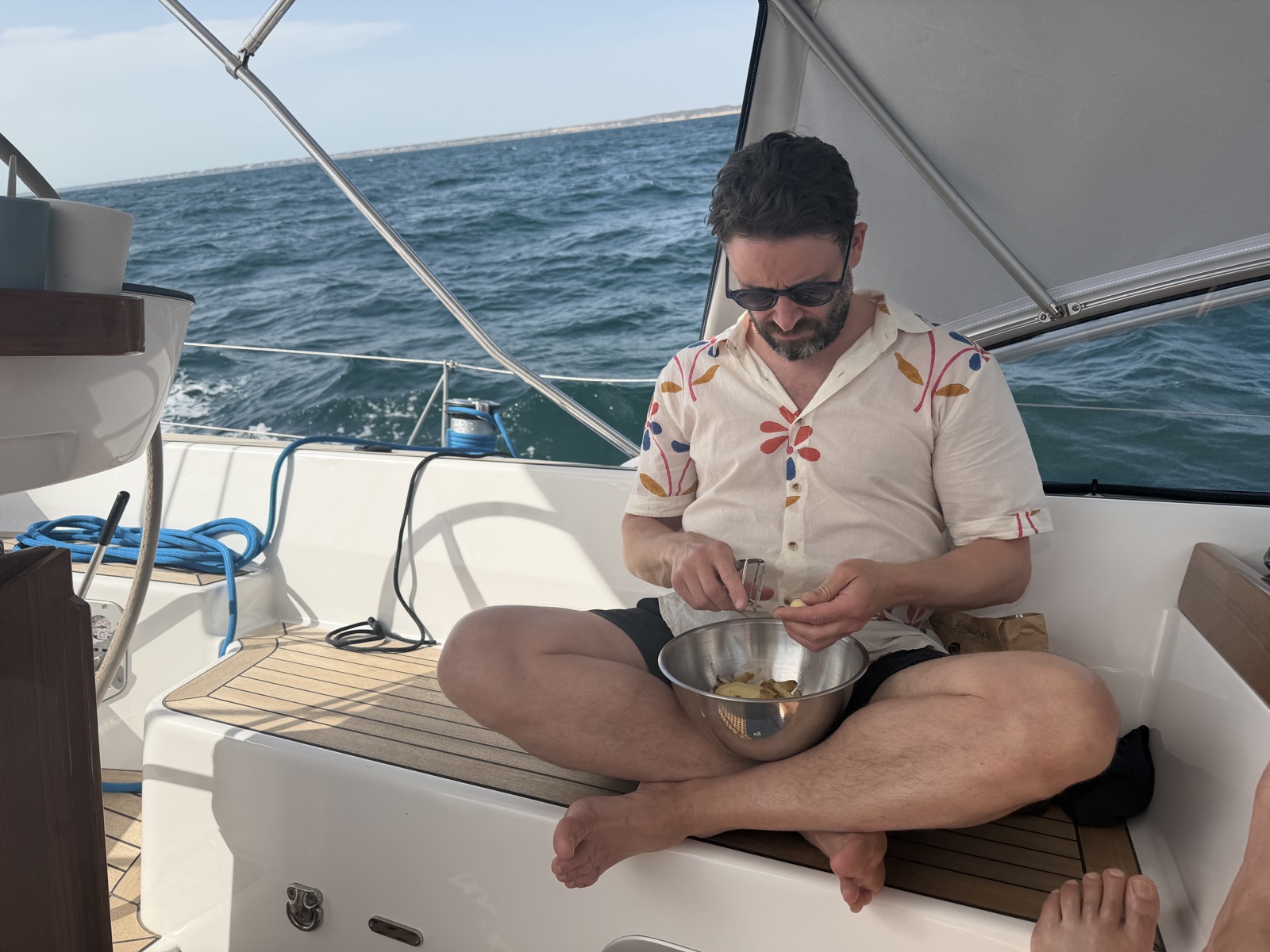
The next morning brought very strong winds. We set sail at 8am and quickly had both sails reefed. The waves were big and it wasn't much fun. After three hours I decided we should bail and find shelter. It took an hour of motoring directly into 30+ knot winds to reach a breakwater where we could anchor. Other boats joined us throughout the day, all hiding from the same conditions.
I spent the afternoon splicing a new, stronger anchor snubber (a line that you tie onto the anchor chain to absorb shock and help keep the anchor in place). We clocked gusts at 42 knots. Thank goodness for the good holding in the anchorage.
The following day was probably one of the more intense sailing days I've had. Waves were large, the slams were hard, and water came over the boat repeatedly, soaking us in the cockpit more than once. After a full day of intensity and gritting our teeth, we arrived at an anchorage we hoped would be sheltered enough, but the waves and wind were coming straight in. We radioed a nearby marina and headed in.
Luckily, the marina was very well sheltered. We docked beside a friendly Dutch boat, decompressed, took showers, then walked into town for tinto con limón (a tasty cocktail made of red wine and tonic, also called tinto verano) and some mediocre Mexican food.
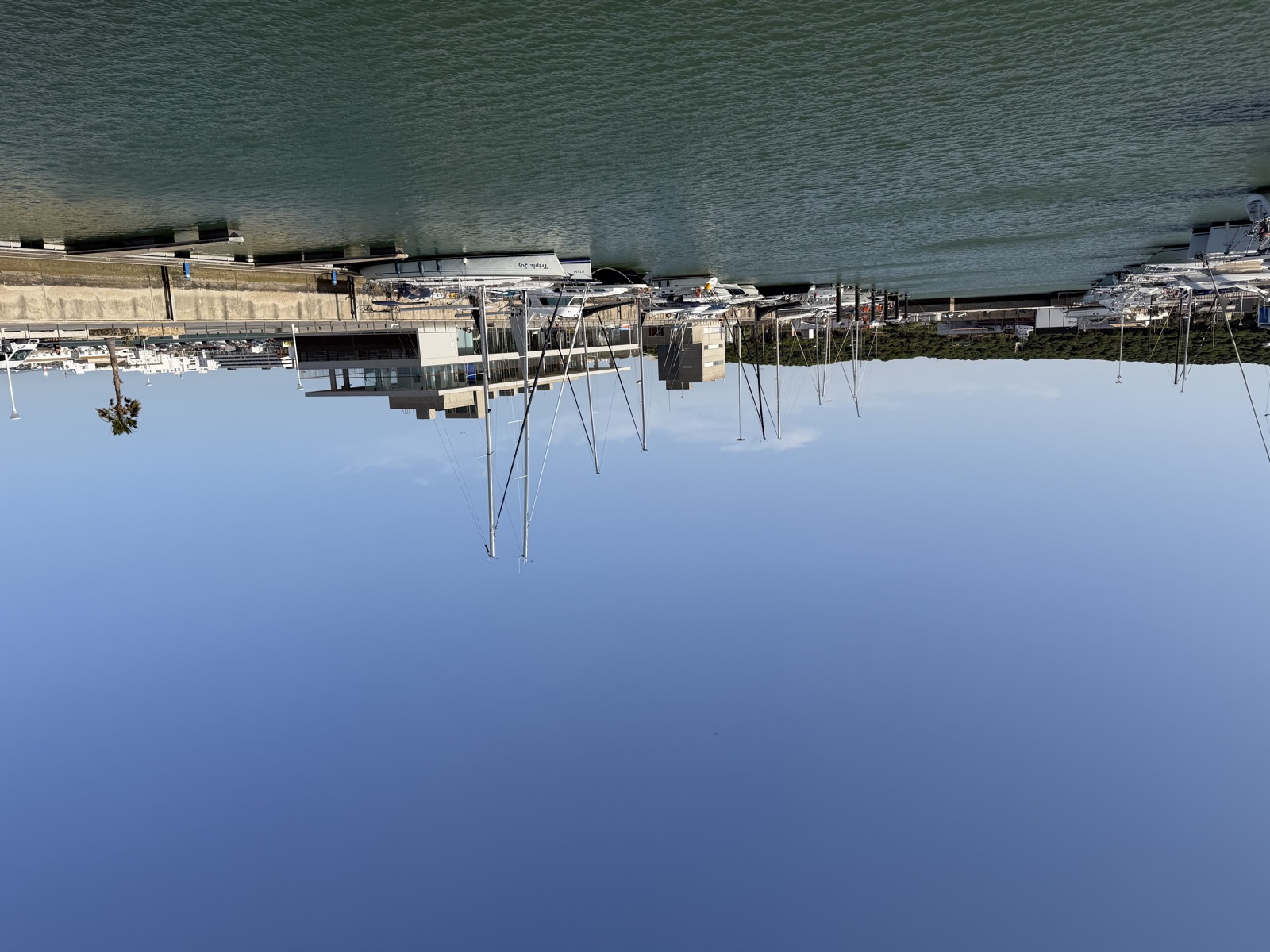
The next day we attempted to push on, but after 45 minutes of slamming into waves that felt even worse than the day before, we turned around and went back to the marina.
The winds had finally eased the next day, though still blowing around 20 knots. We tacked all day, dodging the tuna nets and staying within 20 metres of depth, hugging the Spanish coast. Once past Tarifa, we felt like we'd successfully avoided the orcas and could relax. We made our last few tacks and sailed into the Bay of Gibraltar. I raised the yellow quarantine flag, entered Queensway Quay Marina, and completed our first Mediterranean mooring. I let the marina staff know it was my first time and welcomed any guidance.
Once tied up, we checked in at the marina office, which conveniently handles passport control, saving us a trek through town. Back on the boat, we celebrated our arrival in the Mediterranean with a beer.
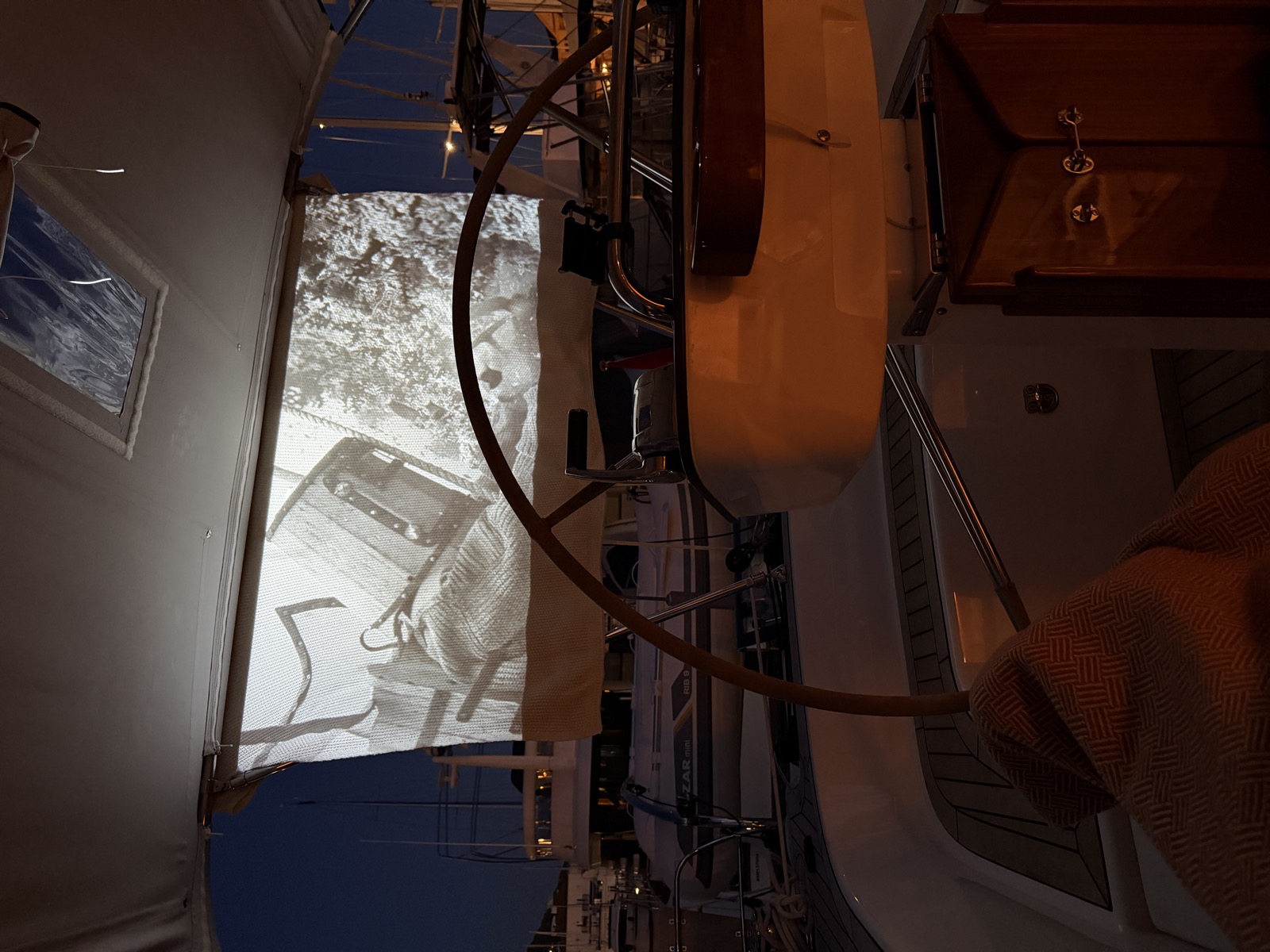
We spent the next few days in Gibraltar, searching out good restaurants, walking the town, visiting chandleries, hiking the Rock, and generally decompressing. I picked up a small projector in town and one night Paddy and I watched The Big Blue in the cockpit.
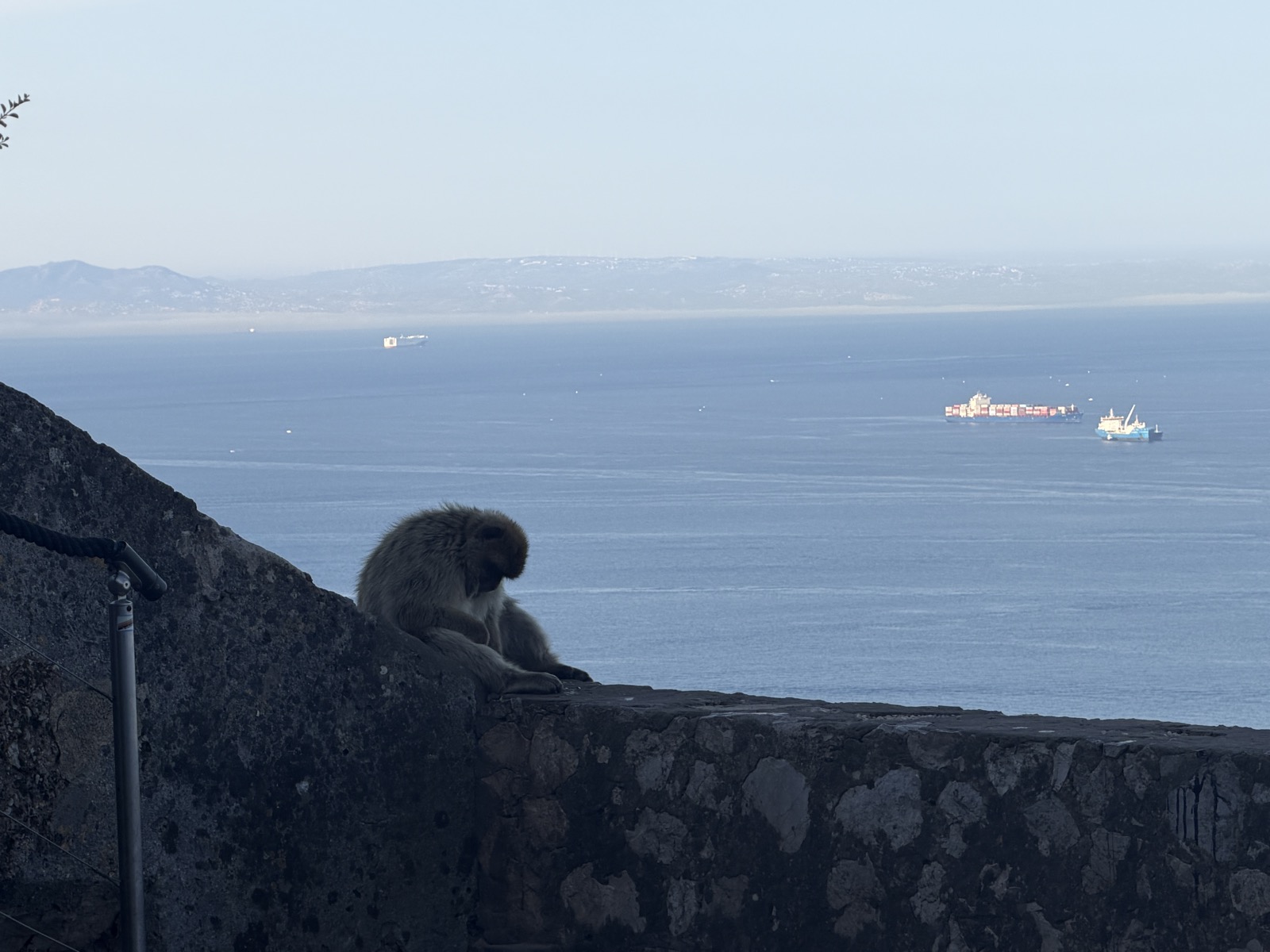
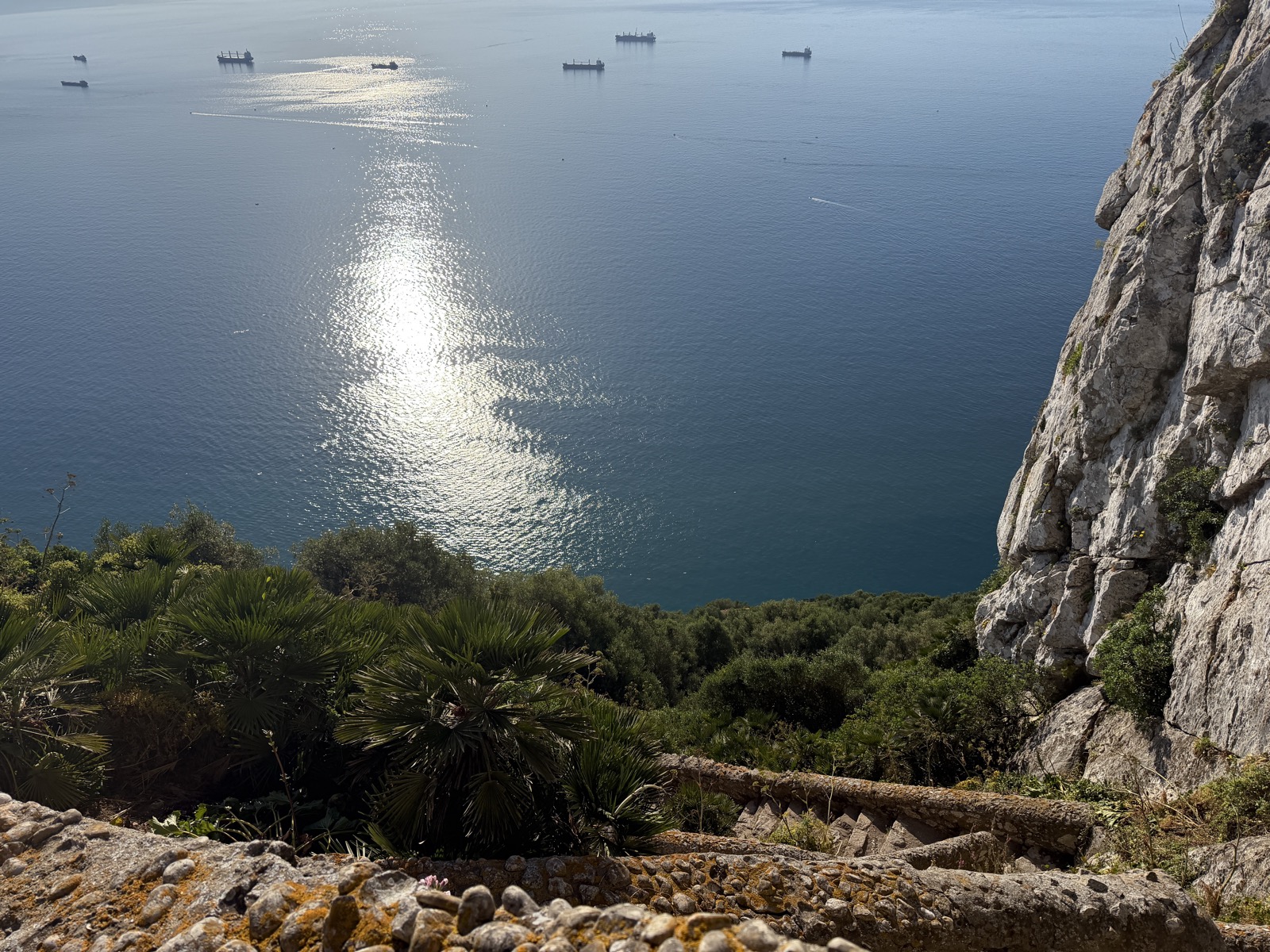
On June 2nd the winds were in our favour. We cast off at 8:30, swung by the fuel dock, but there were two boats ahead of us and I didn't want to burn good wind for cheap fuel. Paddy navigated us through the cargo ship traffic and around the southern tip of Gibraltar. We raised the sails and headed deeper into the Med.
We stopped by Marbella to pick up a third solar panel. I'd made a reservation request at the marina, but they were full. With nowhere to dock, I improvised: anchored offshore, paddled the SUP to the beach, walked ten minutes to the shop where I'd had it delivered, unboxed it, strapped it to the board, and paddled back. Forty-five minutes later we were sailing again.
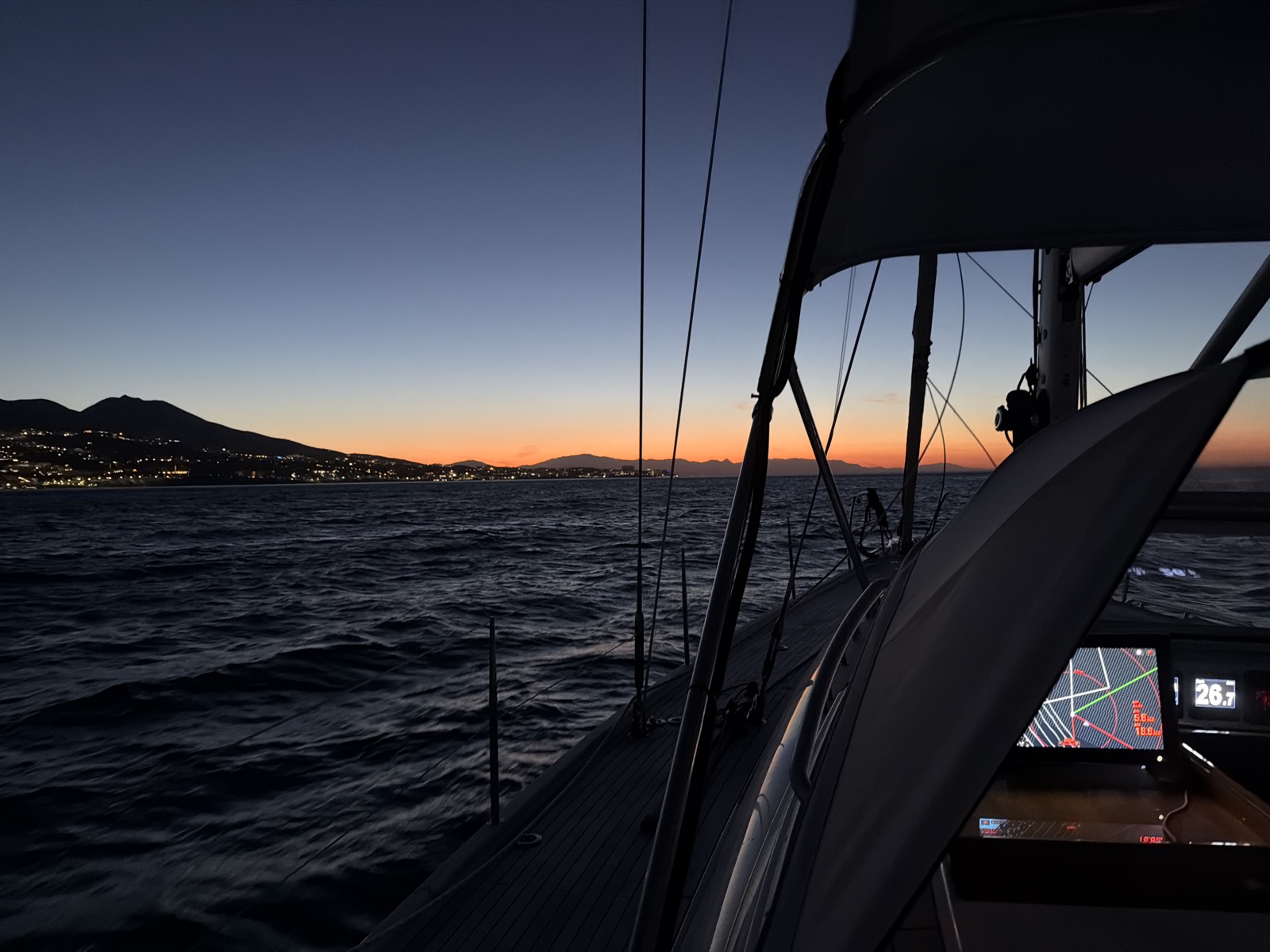
This marked the beginning of a new phase of the trip, one where marinas are full and can't easily take us. Until now I could radio ahead as I approached and find a berth. We tried again at a marina just past Marbella, same answer. I phoned a marina further along, got disconnected, and couldn't get back through. It stressed me a little, since being back in the EU meant clearing immigration, and a marina berth would have made that easier. We gave up on the idea and pushed on, anchoring off a beach at Fuengirola. Paddy made veggie burgers and yam fries. We watched a beautiful sunset and had our last meal together.
At 6am I dropped Paddy at a fuel dock so he could catch the train to Málaga and start his journey home to Victoria.
I sailed on to Málaga, arriving just as his plane was taking off. I radioed port control to ask about a temporary berth; they passed me to a marina, which was also full. I anchored off a beach, paddled the SUP to the breakwater, and walked into town with my passport. After a few requests for directions, I found the Policía Nacional office and cleared immigration. It still strikes me as slightly surreal to walk through a town and clear customs that way. Back on the boat, I finally lowered the yellow quarantine flag and replaced it with the Spanish courtesy flag.
The wind died, so after a few half-hearted tacks I dropped the sails and motored the rest of the way. A long day ended in a town called Adra, anchored in a somewhat exposed area, though the swell was tolerable. The sun had just set when I arrived. I jumped in for a quick shower off the back of the boat, made a simple dinner, and went to bed.
It's now the 4th. I've been sailing slowly all morning. The winds are light and the fog is heavy. Many of the small fishing boats don't transmit their location via AIS, so I have the radar on and I'm keeping an eye out. It's nice to have the Code Zero sail back in action too, as it catches enough of the light wind to get the boat moving at a decent speed.
My plan for the next few days is to cover as much distance as possible and cross over to the Balearic Islands. Britt is meeting me there and we'll be sailing the islands for a few days, and then I'll try to convince her that making the crossing to Sardinia is one hundred percent something she'd enjoy.